We use cookies to make your experience better. To comply with the new e-Privacy directive, we need to ask for your consent to set the cookies. Learn more.

Everything You Need to Know - Brakes

Now Only
$0.00
Regular Price
$5.00
SKU
brakes-blog


THIS IS NOT A PHYSICAL PRODUCT.
This product page is dedicated to an all-in-one source for your upcoming or in-progress build.
The $5 purchase price is intended as a thank you, a "buy us a coffee" option if you were able to make use of this information. The $75 purchase option is for a consult call which we will reach out to you to schedule.
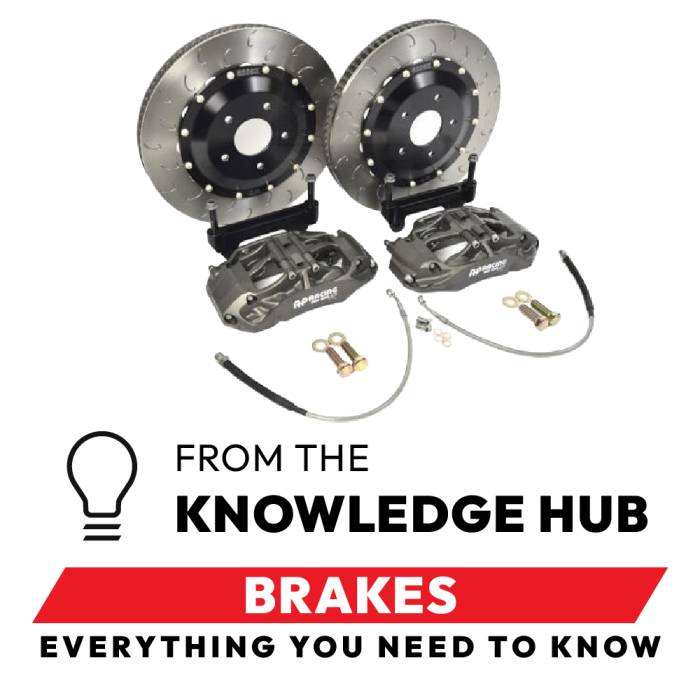
Everything You Need to Know About Subaru Brakes
The WRX and STI are fun cars full of potential and easy to modify.
Once we figured out every detail, we put them into some model specific videos to help owners improve their cars.
We created this page to group all of the videos and blogs that we have on our site on this subject into one place, and you can find all of that information below.
If after looking through all of this information you would like to support the content that we make, you can send us a $5.00 bump which will go towards making new content.
If you still have any questions after going through this information, you can reach out to us though Live Chat, or you can submit a question via email.
If you would like to schedule a special 1 on 1 consultation about your situation or issue, you can do that here as well. This is available on this page or as a separate part purchase. Once you sign up, we will send you an e-mail with some available dates and times so that we can get your consultation scheduled.
We will put points on your account afterwards equal to the cost of your consult that you can use towards any parts you will need!
How to Choose a Brake Pad?
When it comes to how your brakes feel, and how they work, the single part that has the biggest impact on those characteristics are your brake pads. The size and type of brake calipers and rotors that you have on your car play a part in this too. But no matter what calipers and rotors you have, when you apply force to your brake pedal, it is the pads that then have the job of making that input actually happen.
If you are looking for a new set of brake pads, your choice will typically come down to what compound of pad you want. By compound I mean the make-up of the actual material on the pad that comes in contact with the rotor. This is the material or surface that grabs your rotor and slows your car down. Every brake manufacturer typically has a range of different compounds that they offer, and when you are looking at one manufacturer to another, there are usually pretty significant differences in the makeup of the compounds used from one to another.
In short, there are a lot of choices when it comes to picking a brake pad, and that can definitely make it more difficult to find a pad that will work and perform the way that you want it to.
The is no single pad that will do everything well.
The first thing to keep in mind as you pick a pad manufacturer and pad compound is that every different pad compound is making one type of compromise or another. In terms of pad performance, you may be looking for one or more of the following characteristics:
Low Dust
Low Noise
Operates in cold temperatures
Long Pad Life
Low rotor wear
Good initial Bite
Overall Friction coefficient
High operating temperature range
Good pad modulation
The materials that a brake manufacturer picks to blend together to create a compound are going to be based on which characteristics they want to prioritize over others, and that compound then makes a pad work a certain way.
For instance, the materials you would choose to minimize dust and noise, and maximize pad life tend to reduce the overall performance of the pad, and reduce the operating temperature as well. Conversely, the materials that give you a high coefficient of friction and a high operating temperature tend to make a lot of dust and also tend to be noisy. They also tend to have a shorter overall lifespan.
All of this is to say that it is basically not possible to find a pad that will work in freezing temperatures, not dust or make noise, have a high coefficient of friction, and also have a high operating temperature.
When you are picking a brake pad, you are going to get the best results by choosing a pad based on the type of driving or type of use you have planned, rather than hoping to find one pad that will do everything that you might want to use your car for.
How to pick a pad for the street
Generally, long life and low dust/noise are the main criteria for choosing a pad for the to be used on the street. And while many of those pads that are formulated with this in mind can cause your brakes to feel less responsive and in a few cases less than confidence inspiring. Through the years we have found a few street pads that are very civilized, but do still have decent performance characteristics in all weather conditions, etc.
For a long time the Hawk HPS was our go-to pad for something that would perform slightly better than a factory pad, but kept dust and noise to a minimum. This pad works pretty well on the street, but is not something that you would want to use on track. The best characteristics of this pad is that it has very low dust and noise.
Temperature range: 100 - 700 F
A few years ago, Hawk came out with a new updated HPS compound called the HPS 5.0. We have tried this compound on a number of cars, and this is now one of our preferred pad where you want a bit more performance than the HPS has to offer. The HPS 5.0 compound is still very civilized in all temperatures and weather conditions, but it offers a higher level of performance than the HPS. It does dust a bit more than the HPS, and it can start to make some noise when temperatures get below 20 deg F.
Temperature range: 100 - 750 F
If you prefer Hawk pads, and you want something more aggressive than the HPS 5.0, the HP Plus pads are the next step up from them, and they offer similar performance to the DS2500. They do dust a fair amount, and they wear the rotors more, but they definitely offer more performance. They will work in the winter as well (I ran these year round on our 2003 WRX project car for a couple of years). Hawk does consider this an entry level track pad, though it is mainly recommend for Autocross.
Temperature range: 100 - 800 F
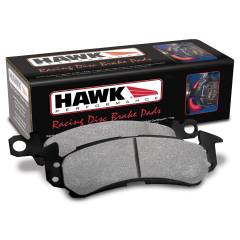
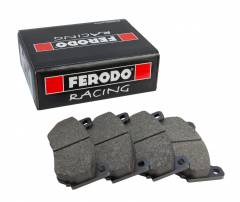
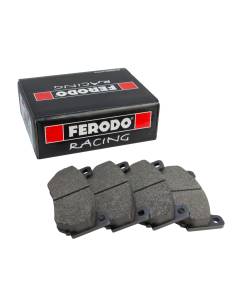
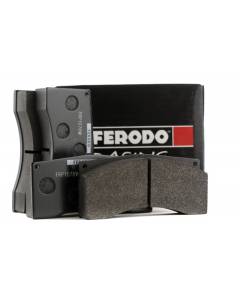
If dust is less of a concern, and you are looking for even more performance than the Hawk HPS or HPS 5.0 pads offer, the Ferodo DS2500 pads can be a good option for the street. They have more initial bite than the HPS 5.0's and they will make a little more noise in the cold, but they definitely perform better all around. And because they have a higher operating temperature, they could be use as an entry level track pad in some circumstances. This would be for lower power cars that are just running Summer tires, but not race tires, or for cars that are running large brake kits that reduce pad temperature on track significantly.
Temperature range: 32 - 900 F

How to pick a track pad
There are two basic assumptions that we are making when we start talking about track pads. The first is that you have installed stainless steel brake lines to improve pedal feedback, and you are running a higher temperature brake fluid (typically DOT 4) to raise the overall heat capacity of your braking system. You really need those two components in place as you start to go with more aggressive, higher temperature pad compounds.
Beyond that, they key consideration for this type of pad is overall coefficient of friction, and heat range. It could be that you end up having to try a couple of different compounds of pad to find one that will work with the type of driving that you are doing and the type of tires you are running. the more aggressive you are on the brakes, and the stickier the tires that you run, the more heat you will be able to put into your brakes.
A word about the life of track pads
When you are running pads at the track, life is not measured in miles. More typically it is measured in time on track, or number of track days before the pads need to be replaced. And in terms of thickness, because track pads will be getting much hotter and used much more aggressively than a street pad, you may want to replace track pads long before you would replace your street pads.
A rough rule of thumb is your pads have gone through 3/4 of their life when the pad thickness is half of what it was new. The reason for this is that as the friction material thins, more and more of the heat that the pads and rotors generate is going to work through the pad compound, and into your calipers, etc. That additional heat can wear down the pad compound faster as it thins out, and that can lead to faster and faster wear.
In short, you definitely want to keep a close eye on your pads when they get down to 1/2 of their original thickness, and definitely replace them well before there is only a couple of millimeters of pad compound left. If you do end up wearing through all of the pad compound on track, and end up with only the metal backing plates left to press against the rotors to stop your car, your stopping power is going to be significantly reduced, and the chances of sparks etc. causing issues if you do end up off track goes way up.
It just isn't worth the risk.
How can you tell if you overheated your pads?
Especially when running a brake compound with a high operating temperature with sticky (R-Compound tires), you are going to be putting a lot of heat into your brakes. When you start running your car this way, you need to keep an eye on your brakes and brake system to make sure you aren't significantly overheating it. A spongy pedal (brake fade) can be one sign that the brake system is overheated, but with higher temperature fluid, or with a brake kit that has a much higher temperature capacity than street calipers, this may not be enough of an indication.
The two main signs that you want to look for are burnt paint on your backing plates, or a burnt or ashy appearance of the pad compound, and melting of your calipers dust seals (if they have them). If you see those signs, they are definitely a good indication that your brakes are getting very hot, and you may want to look at either changing the compound of pads you are looking, going with a larger brake kit that has a higher heat capacity, and possibly cooling ducts for your brakes if you haven't put them on all ready.
The first reason that this can be cause for concern is that various pads will behave differently when they are overheated. Hawk pads (in our experience) tend to transfer larger amounts of pad compound to the rotors, which can cause a lot of pedal and wheel vibration as well reduced stopping capability. Ferodo pads (in our experience) will still work when overheated, but tend to wear much more quickly.
Basically, the characteristics of the pad can change dramatically when they are run well outside of their designed heat range, so you then have to pay close attention to your brakes as you continue to use them. At an extreme, those changes in the way that the pads work could potentially lead to a safety issue on track if the brakes end up failing.
Our recommended track pads
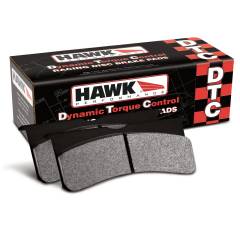
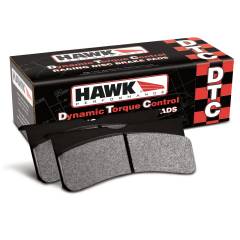
Hawk DTC30
We ran the Hawk DTC30 pads in our Pikes Peak car for a number of years. One of the main reasons that we selected this compound was because it was available in a good number of pad shapes, and it started to work at a fairly low temperature for a track pad. This gave us good performance even when cold, and these pads worked well up to the point where we overheated them. The main issue we ran into with this compound specifically was as we moved to sticky R-Compound tires, it was fairly easy to overheat them, and once that happened, the pads were ruined and there was a lot of vibration in the brakes because of the pad compound transferring to the rotors.
This is a good pad compound for a lower power car, or if you are using something like high performance summer tires. If you move to race tires, you may want to run a more aggressive pad.
Temperature range: 100 - 1200 F
Optimal temp range: 100 - 800 F
Ferodo DS 1.11
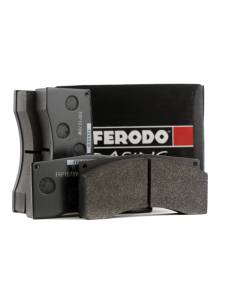
The Ferodo 1.11 pads would be a step beyond the DTC30, but they still work well even on your first lap on track. They are more of an endurance pad, and they have good initial bite, and they are fairly linear. The more pressure you apply, the more stopping power you get.
This is a good option if you have a lower power car (sup 400 whp) and are running race tired, and or a good brake kit that has good heat capacity.
As another point of reference, now that we went up to the RCM Alcon 365mm front brakes on our Pikes Peak car, we are running the Ferodo 1.11 pads front and rear and they work great on Pikes Peak or at the track on R-Comps.
Temperature range: 390 - 1380 F
G-Loc R-12 and R-10 compound
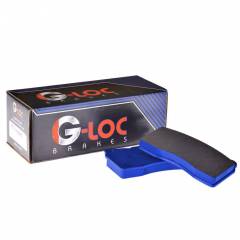
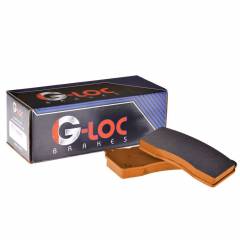
If you are looking for a step up from the DTC30 pads, you should consider running G-Loc R12 pads up front, and G-Loc R-10 pads in the rear of your Subaru. With these pads, a staggered setup is recommended for Subaru's because the rear pads take a lot longer to heat up, and typically don't get nearly as hot as the fronts.
The G-Loc R12 compound falls in between the Hawk DTC30's and the DTC60/70's. The main advantage of the G-Loc pads is that they don't wear the rotors as aggressively as the Hawk pads, and they offer much better pedal modulation compared to the Hawks.
R-12 temperature range: 173 - 1860 F
R-10 temperature range: 118 - 1475 F
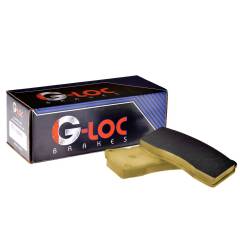
The G-Loc R16 compound is roughly equivalent to the Hawk DTC70/60 pads. The main advantage that G-Loc has is that they have much better pedal modulation than the Hawk pads, and they will not wear your rotors as aggressively.
For Subaru's you would most likely want to run the R-16 compounds up front and R-12's in the rear.
Temperature range: 255 - 2000 F
Hawk DTC60 - DTC70
If you want to stay with the Hawk pads, and go up from the DTC30's, your best bet in a Subaru is to go up to Hawk DTC70 pads up font with DTC60 pads in the rear. These pads have much higher operating temperature than the DTC30's, and because they do need heat in them to really start working, it is recommended to run a slightly lower compound in the rear because they won't get as hot as the fronts.
This combination will give you a ton of stopping power, and high heat capacity. We have ran these on track with good results using race tires.
The main down side to the Hawk DTC70/60 pads is that they don't have as much modulation as the G-Loc or Ferodo pads, and they wear the pads and rotors fairly quickly.
They do provide a significant amount of stopping power though.
As a quick note, if you didn't want to take this big of a step up, you could try DTC60 pads up front with DTC30 pads in the rear. But at that point you may be better off looking at the G-Loc R12/R-10 pads or Ferodo 1.11 pads.
DTC70:
Temperature range: 400 - 1600 F
Optimal temp range: 800 - 1200 F
DTC60:
Temperature range: 400 - 1600 F
Optimal temp range: 700 - 1100 F
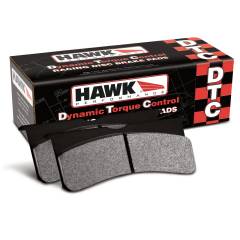
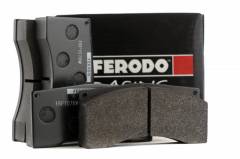
Ferodo DS 3.12
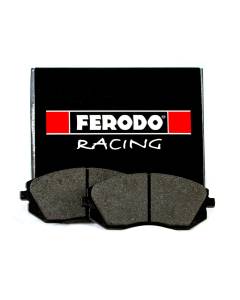
The Ferodo DS 3.12 pads are just like the Ferodo 1.11 compound, but better in every way. They have better initial bite and higher overall coefficient of friction than the 1.11 pads, and have a higher operating temperature as well. They are also much easier on rotors compared to the Hawk DTC70/60's.
Nigel has been running these on his race car and loves them.
They are also very linear through their optimal temperature range.
Temperature range: Max temp 1560 F
Which Brake Fluid is Best?
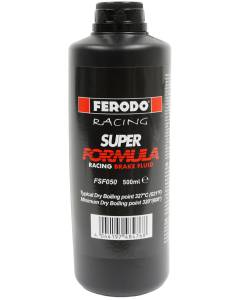
What is the best DOT 4 brake fluid, and how often should you change it?
Although though there are some cars that come with DOT 4 brake fluid from the factory, most cars come with DOT 3. Subaru's come with DOT 3 fluid across the board, so if you want to improve the capacity of your brakes, and especially if you want to take your car to the track, you are going to need to replace that DOT 3 brake fluid with DOT 4 which will have a higher heat capacity.
But are all DOT 4 brake fluids the same?
And is there anything that you should keep in mind about change interval, etc when you make that change?
We cover all of this and more in this video.
Are Your Brakes Just Slowing You Down?
For episode 49 of the Flatirons Syndicate Motorsports Podcast, Jon, Ryan, and Scotty sit down to talk about how the last NASA Rocky Mountain event went at High Plains Raceway the previous weekend.
When you are building a car to compete in a specific class, it is natural that your focus would be the cars and drives that you are competing against. What Scotty and Ryan discovered was that sometimes taking a look at what is going on in other similar classes can be enlightening too. That change of perspective can give you some ideas of new things to try, as well as new benchmarks for how competitive your car actually is.
Scotty and Ryan are usually focused on the NASA Time Trials classes, but the class that got their attention this weekend was the GTS (German Touring Sedan) 2 and 3 classes. These are typically BMW’s that have lower power-to-weight limits in their class (14/1 in GTS-2) and these cars race wheel to wheel as well. So there is no guarantee that they will get clean laps. But even with all that, those cars would dominate the class that they would fit in for Time Trials.
This lead to two important realizations. The first was that it can really help to run a car in a class where there is a clearly tried and tested upgrade path, with parts that are well known to be effective. The second was that sometimes your brakes are just slowing you down.
How Much of a Difference Can Pads Make?
We are collaborating with Flatirons Subaru for a series on this 2022 WRX, and for the first installment, we have brought the car into our shop for the first round of modifications.
Since we got this car completely stock, we are just starting out with the basics to get it ready for its first track day. We put on a fresh se of Yokohama Advan A052 tires, some Porterfield R4S brake pads and Motul RBF600 brake fluid. We also changed out the oil since its used car and we weren't sure on it's last change.
We have to send a big Thank You to Flatirons Subaru for making this series possible!
https://www.coloradosubaru.com/
Can You Put 6-Pot Brembos on a VB?
When it was announced that the WRX TR would be getting 6-Piston Brembo brakes, it sparked two questions.
First was how easy it would be to put these on a standard WRX?
Second, are these Brembos the same as what came on the 2019 - 2021 STI?
We were curious too, and we decided to make this the first modification to our 2024 WRX project car. The install went very smoothly, and the performance upgrade that this offers for the price really can't be beat!
We go into all the details about what it takes to fit these brakes to the VB WRX, what parts you need, and what wheels fit these brakes as well.
This install was really easy, and we can't wait to take the car out to test out the new Brembos!
We have put together kits with everything you need to install these WRX TR Brembos onto your VB WRX, or older WRX or STI as well!
We used the WRX TR Knuckles to make this install, and future wheel fitment easier, and we do have them on our site separately:
-
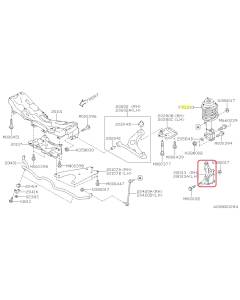 Subaru OEM Knuckle - Front Left (24+ WRX TR)Now Only $139.77 Regular Price $184.03
 -
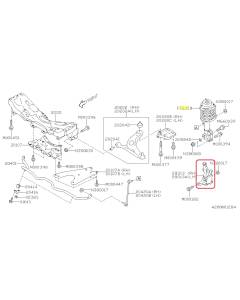 Subaru OEM Knuckle - Front Right (24+ WRX TR)Now Only $139.77 Regular Price $184.03
Can a Bad Wheel Bearing Lead to Brake Failure?
We recently had our Pikes Peak car at the track to test our engine, and we ran into a bit of an unusual issue.
Our brakes failed.
We ended up going off track (fortunately Nigel kept the off to a minimum so nothing was damaged) at the end of a high speed straight when the brake pedal went to the floor.
Then the brakes seemed to come back, but they were inconsistent for the rest of the day.
Inconsistent brakes are one of the worst things that you can have when you are driving at the track, so we knew that we had to get to the bottom of this.
And it turned out to be a wheel bearing issue.
How can a wheel bearing failure cause the brakes to fail? It is called Pad Knockback and we go into detail in this video.
A look at the Brake Up Grade Path for our 2014 WRX Pikes Peak Race Car
If you are serious about going fast, you are going to need to stop fast too. And if you really want to be able to turn fast lap times lap after lap, having a good brake system that can handle that kind of use is essential.
We have found that building a brake system can be more involved than it might seem, so we put together this video to go through our process on our Pikes Peak Race Car which started out life as a 2014 WRX.
Hopefully this will give you some good information to help you build up your brakes as well.
Upgrading to the AP Racing Endurance 325mm Kit from Essex Motorsports
After many years of reliable service, the time has come to upgrade the brakes on the 2003 WRX Project car. The brake kit we chose is the 325mm AP Racing Endurance brake kit put together by Essex Motorsports, and in this video we will go into all the details about this kit that helped is make our decision.
Remember, you can't go fast around the track unless you can stop fast too!
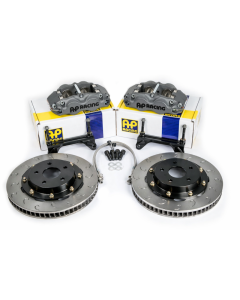
Can You Put Rear Brembos on a GD WRX (2002 - 2007) or Forester XT (2004 - 2008)?
If you have a WRX and you want to upgrade your brakes, the fronts are easy to do, that there are many options. One of the popular ones is to get the Brembo calipers off of an STI, which are a very nice upgrade for the WRX.
But if you are upgrading the front calipers, and putting on a much larger rotor than stock, you will also want to look at your rear brake system as well. This is especially true if you are tracking the car and using aggressive brake pad compounds, etc.
There are much fewer options for rear Brake Kits for the WRX, and in large part this is because of the added complexity of the parking brake in the rear.
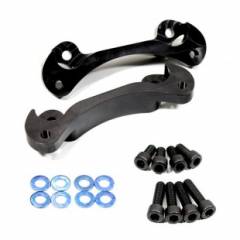
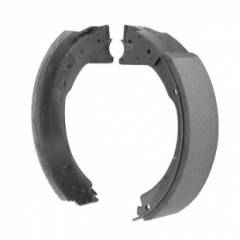
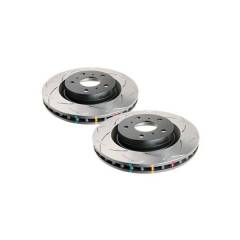
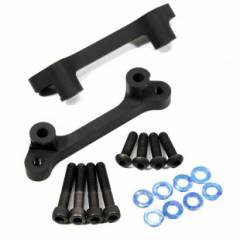
But through the years, various companies, including Brembo themselves, have made rear conversion kits to put the same Brembo calipers as the STI onto the back of the WRX. This is done with adapter brackets, and special conversion rotors.
If you are piecing a kit together yourself though, there is still a lot of confusion involved in getting the correct parts to get everything to work properly, so we wanted to go through the process for you in the hopes of making that more clear.
In addition to that, KNS Brakes has come out with another solution for the rear parking brakes when doing this conversion that may be appealing to you as well. So we wanted to feature that new solution too.
Can You Put STI Rear Brembos on your GR WRX (08 - 14)?
As we have been improving the brakes on our 2014 WRX Pikes Peak Race car, one of the issues we have had was finding a good option for the rear. Front brake upgrades are widely available and we as we have been making the car faster, we have now put on the Stoptech 328mm ST40 brakes, and they have been working well.
But we have noticed that our brake bias has shifted largely to the front, and we have discovered that this is causing issues, and preventing us from getting the performance out of the brakes that we need.
So we have been looking for another upgrade option, and we have now put the STI Calipers, and the 316mm rotors on our car, and it turns out that it is now a great options.
If you have a GR WRX (2008 - 2014) and you are tracking your car, and especially if you are running R-Compound tires, this is something that you should consider.
What Brake Upgrade Options Do You Have?
If you have a WRX or and STI, and you have taken it to the track a few times, or have tuned it up to make more power, you may be at the point where you want or need to upgrade your brakes.
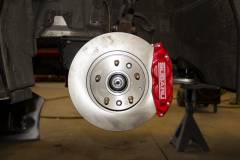
There are a number of common upgrades, such as the Subaru 4-Pot and 2-Pot calipers from the 06-07 WRX, or the STI Brembos. And ever since the STI got the larger Brembo 6-piston calipers, those are becoming a more common upgrade as well for both WRXs and STIs.
So when would you want to go with a set of OEM Plus calipers, and when would you want to look at a motorsport brake option from AP Racing or Alcon?
We go through all of these options in this video and talk about the pros and cons of each.
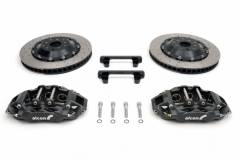
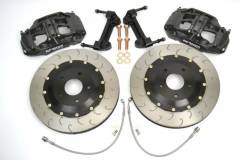
What Brake Upgrade Path is Right?
If you are looking to improve your cars braking performance, the place to start is with a better set of brake pads and a higher temperature fluid.You can definitely make a noticeable improvement to your cars stopping ability this way, but if you are tracking your car, putting on much larger wheels and tires, and especially if you are running R-Compound race tires, you may not be able to get enough improvement out of pads and fluid alone.
The next step from here is to look at putting on an upgraded caliper, of a full big-brake kit that uses larger rotors and calipers to give you a big step up in your stopping ability.
There are a lot of options out there for this, so we wanted to put together a blog that helps to walk you through the common options for your WRX or STI.
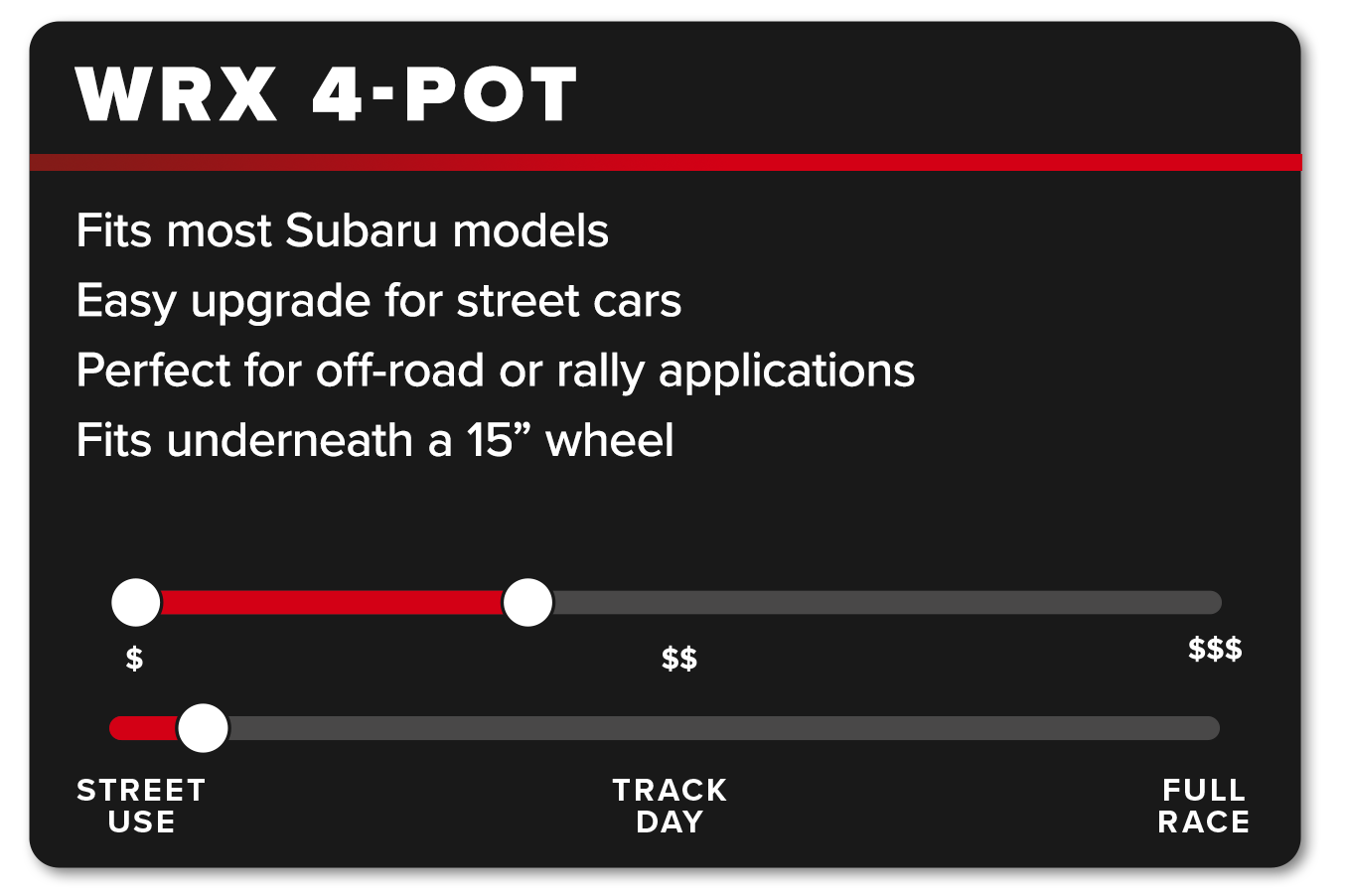
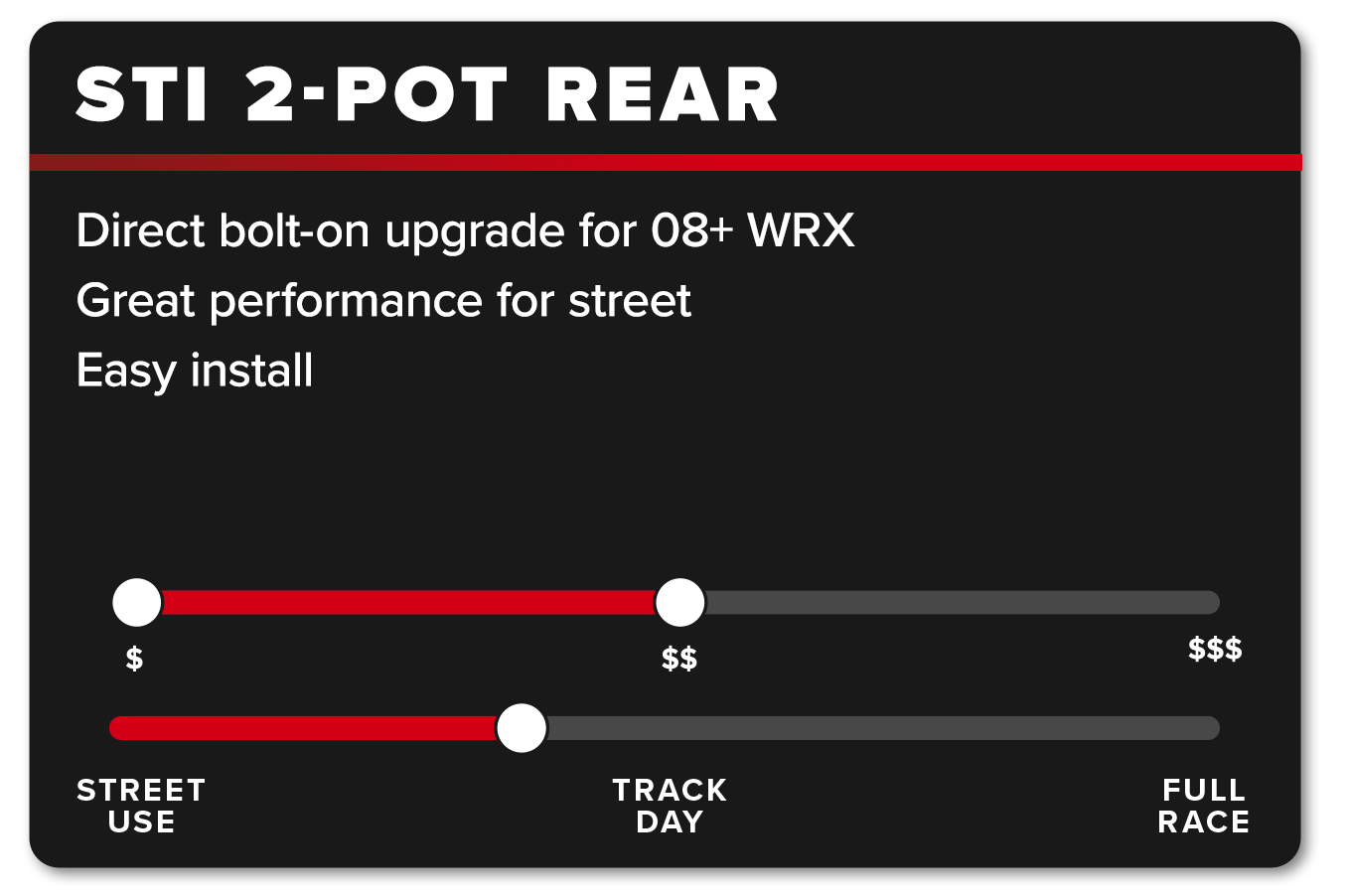
Subaru 4-Pot and 2-Pot calipers
These calipers first came on the Version 6 STI in Japan, but they also came on the 2006 - 2007 WRX as well. The front calipers use the same size rotor that the WRX has had from 2002 - 2014, so they are a simple upgrade, and the rear rotors are ventilated and slightly larger than the standard 02 - 05 WRX so on that car especially, the set of front and rear Subaru 4-pot and 2-pot calipers can be a very good, cost effective upgrade.
These calipers are also awesome for gravel and rally use because they will fit under 15" Rally wheels.We have been using them on our Rally car for years, and they are quite common on Subaru rally cars.
For 2002 - 2005 WRX
These calipers will work with your stock front rotors, so if they are in good shape, you don't even need new rotors to put on these calipers.
In the rear, you will need the KNS V1 adapter to bolt the caliper to your knuckle, and you will also need the 2006 - 2007 rear rotors (they are 290mm) to work with these calipers.
For 2004 - 2007 STI
You can run these calipers, but keep in mind that they are smaller than the STI Brembo's, so you would typically only do for Rally Applications. The calipers will be a direct bolt on ( you will need WRX bolts because they are a different thread than the bolts for the Brembo's), but you will need different rotors front and rear.
If you have a 2004 STI only, you will need WRX front and 2006 - 2007 WRX rear rotors (both of which are 5x100 bolt pattern).
If you have a 2005 - 2007 STI, you will need the KNS gravel rotors which are 5x114.3 rotors.
For 2008 - 2014 WRX
The Front Subaru 4-Pot calipers are still a direct bolt-on for the front brakes, but the rear Subaru 2-pots will require a different bracket (the KNS-007) and a different rotor to work.
To fit the caliper you will need the BRZ rear rotors because they are wider and vented, and have the correct sized drum for the parking brake for the 08-14 WRX. It is also recommended to switch to the 2006 - 2007 WRX style rear brake lines.
Because of the relatively small size of the factory rear caliper and pad, the Subaru 2-pot rear caliper is a good starting point for a brake upgrade on this car. However, if you need a big improvement in stopping power, and you are looking to upgrade the front brakes as well, the STI Brembo calipers would be a great option. We will get to the details further down the post, but the black STI Brembo rear calipers are a very simple bolt on for the 08-14 WRX, and they make a much bigger difference compared to the Subaru 2-pot calipers.
For 2008 - 2014 STI
For the 2008-2014 STI, the install of the Subaru 4-Pot and 2-Pot calipers is largely the same as on the 04-07 STI. In the rear you will need the KNS-007 bracket with the FHI/Subaru hardware, and for both the front and rear rotors, you will need a special "Gravel" rotor to fit with the 5x114.3 hubs.
Because this is a smaller brake and rotor package, for this car we would only recommend these brakes for Rally applications where you have to fit 15" wheels on the car. It is also recommended to switch to the 2006 - 2007 WRX style rear brake lines.
2004 - 2017 STI Brembo Brakes
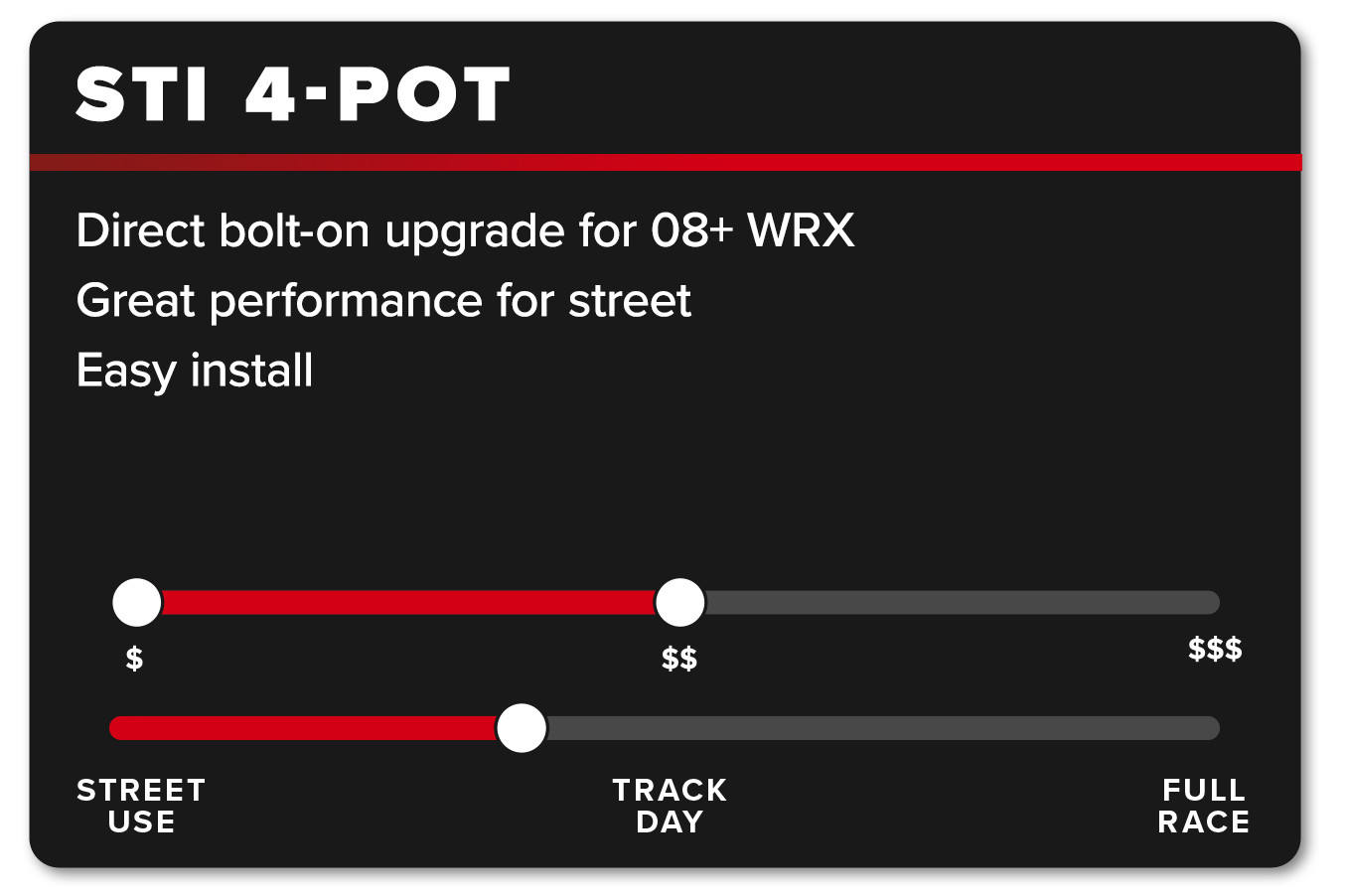
From 2004 - 2017, the STI came with front and rear Brembo brakes which gave the STI great brake performance, and the good news is that these can be fitted to a WRX of a similar year range fairly simply.
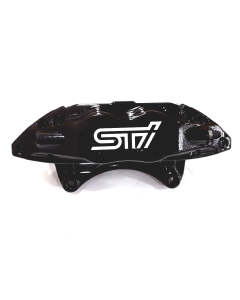
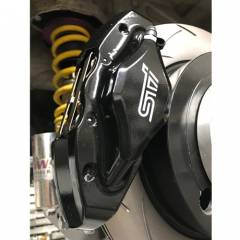
From 2004 - 2007 the STI had gold calipers, and from 2008 - 2014 the STI had black calipers. The front calipers are identical except for the color, but rear calipers are actually fairly different. Because of the difference in the calipers, the Gold rears can be fitted to the 2002 - 2007 WRX and the 2008 - 2014 WRX with the correct bracket(The KNS-007). The Black rear calipers can only be fitted to the 2008 - 2014 WRX, and they do not require any bracket for installation.
The front STI Brembo calipers attach to the front knuckle with the same mounting points as all of the years of the WRX (2002 - 2014), so the only thing that you need to install them are Brembo bolts (they are a different thread pitch than the WRX calipers), and STI rotors that will work with your WRX hubs.
Where is this upgrade ideal?
STI Brembos are a fantastic upgrade for any WRX to give you much improved brake performance on the street. They will also give you much better performance on track, but because they are street calipers, they are not ideal for dedicated or aggressive track use. They do have external dust seals, so if you are going to be tracking a high power car, or using an aggressive track pad compound, you will want to keep an eye on these seals, and if you have issues with melting them, etc., we would recommend a more track focused brake upgrade.
For 2002 - 2005 WRX
Up front, you only need the STI bolts and rotors to install the front calipers.
In the rear, you will need an adapter bracket (KNS-005) with Brembo hardware, and for the rotor, you will either need an adapter rotor to work with the smaller R160 parking brake, or you will need the KNS-800 adapter shoes that will let you use a standard 2004 - 2007 STI rear rotor.
For 2006 - 2007 WRX
Same install up front as the 2002 - 2005 WRX.
In the rear, you can bolt the gold Brembo calipers to your existing brackets, you will only need the corresponding Brembo bolts (the thread pitch is different). For rotors, you have the same two choices as the 2002 - 2005 WRX with either an adapter rotor, or the KNS-800 adapter shoes to run a standard 2004 - 2007 STI rear rotor.
For 2008 - 2014 WRX
Up front, the install is the same as the previous years of WRX. You just need Brembo bolts to attach the calipers to your WRX knuckles, and rotors to match.
In the rear, because it attaches with a smaller bolt spacing, you can run the Gold STI Brembos, but you will need the KNS-007 bracket with Brembo hardware. For rear rotors, you will just need a 2008 - 2014 STI rear rotor with 5x100 bolt spacing.
For this year range of WRX, the Black Brembo calipers are more ideal because the rear calipers will bolt to your WRX mounting bracket with Brembo hardware.
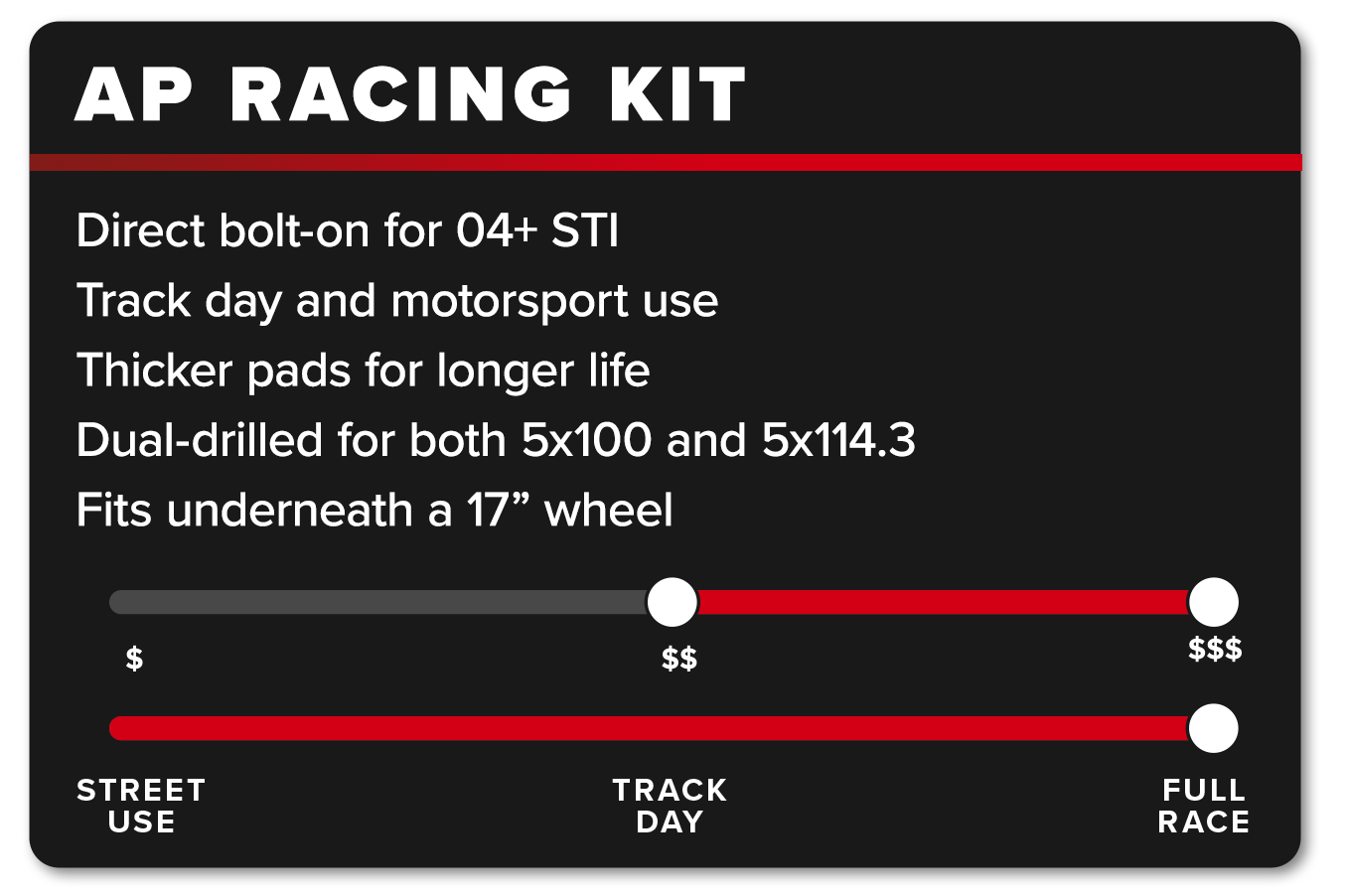
AP Racing 325mm Competition Brake Kit with CP8350 AP Racing Calipers
Don't let their size fool you. Even though this AP Racing brake kit uses calipers and rotors that are the same size as the STI Brembo calipers, this kit offers superior on-track performance compared to the STI Brembos. The key difference here the calipers and pads.
The AP Racing CP8350 calipers use a pad that is twice as thick as the Brembo pad, and this has a few benefits. The most obvious is longer pad life (and believe it or not, these pads cost about 40% less than the Brembo pads with the same compound), but they also isolate the caliper from heat much more effectively than the Brembo pads as well.
In addition, the AP Racing calipers do not have any external dust seals, so they are much better suited to aggressive use, and the heat that track pads will create than the STI Brembo calipers.
This kit also comes with two-piece AP Racing J-Hook rotors which are a substantial weight savings over the stock STI rotors.
All in all, this kit offers much better on-track performance than the STI Brembo's do. And because the less expensive and longer lasting pads, this kit can honestly pay for itself over a couple of seasons of use. For very high power cars, or race cars that are using 275 width or wider R-Compound tires, you may be better suited to a larger competition brake kit. Just keep in mind that they will require 18" wheels to clear the larger rotors and calipers.
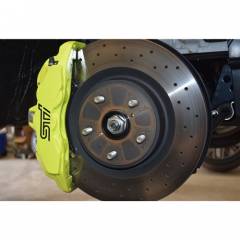
2018+ STI 6-Piston Brembo Calipers (and STI Type RA Calipers)
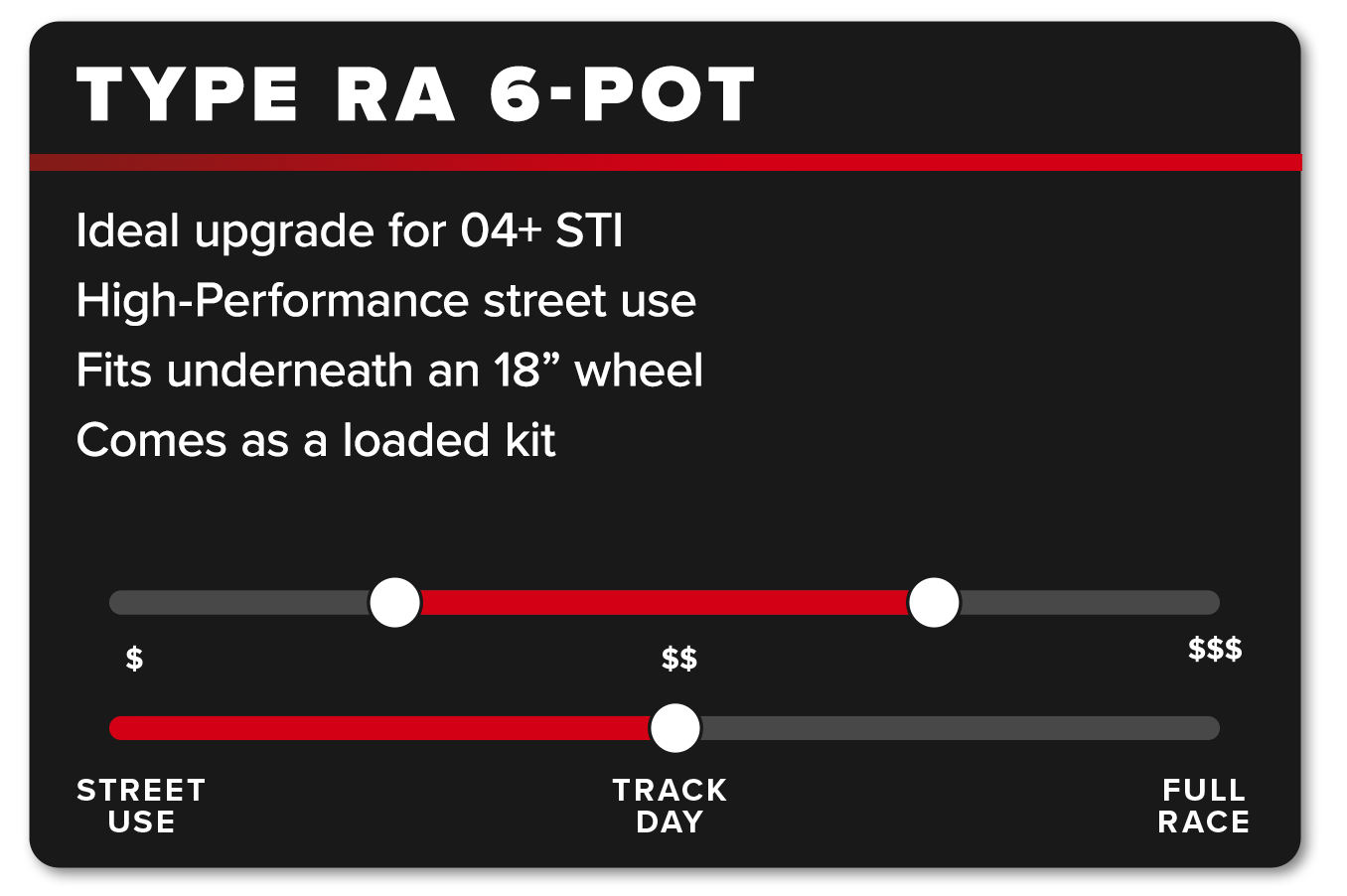
Starting with the STI Type RA, and then the 2018+ STI, Subaru finally gave the STI a brake upgrade with larger Brembo calipers, with a 6-piston Brembo caliper up front. The front calipers use a 340mm rotor, and the rear calipers use a 328mm rotor. Because of the larger rotors, this can be an upgrade for the previous generations of STI.
Up front, the attachment of the front calipers is still the same as the black and gold Brembo calipers, so as long as you have a 340mm rotor that will work with your STI or WRX hub, these calipers are a direct bolt on.
The rear caliper and rotor are entirely different than the previous generation of STI, and as of writing this, we only know that they are a direct bolt on for some of the 2015+ WRX's, and we don't know if they can be adapted to fit on the older WRX's or STI's.
Where is this upgrade ideal?
Because these Brembo calipers still have the external dust seals, and because of the weight of the front rotors (they are even heavier than the 328mm STI rotors), this is a more ideal upgrade for a street car than a car that is seeing a lot of track use. There is also a somewhat limited availability of the front (and especially the rear) pads in terms of compound currently. So for full track use, a different brake kit with lighter components and better pad selection might be better.
As a quick note on wheel fitment, we have test fit all of the factory STI wheels (18" or larger) back to 2008 and they all clear these 6-piston front calipers.
-
 Subaru OEM 2018 STI Brembo 6-POT Brake Upgrade Kit (05-17 STI, 15-21 WRX)Now Only $2,659.88 Regular Price $2,697.93
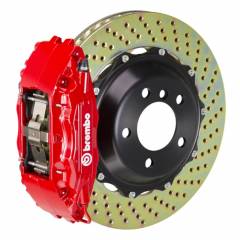
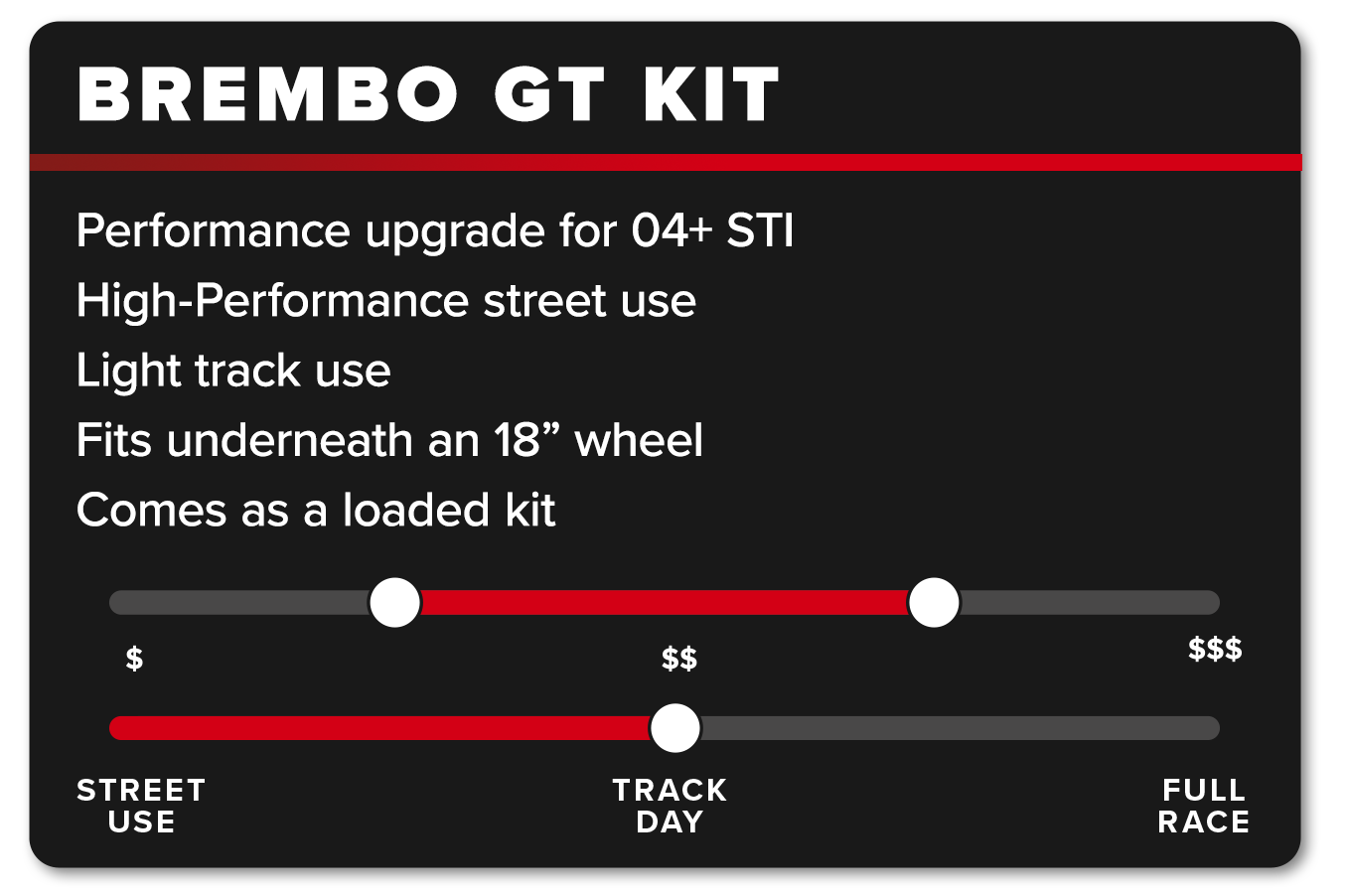
Brembo 355mm GT Front Brake Kit
Brembo has had a 6-Piston brake kit for the STI for a number of years, and even though it looks very similar to the 2018+ STI Brembo caliper, there are some key differences. The first being that this kit uses a 15mm larger rotor (355mm versus 340mm) 2-piece rotor. This larger rotor weighs a good deal less than the 340mm STI rotor, and it gives the caliper a better mechanical advantage because of its larger diameter.
The calipers themselves are one-piece calipers which are more rigid than the 2-piece STI calipers, and they also run a much larger brake pad. This caliper has been around for a long time, so there is currently a better pad selection for this caliper compared to the STI 6-piston.
One thing to note is that with any of the Brembo mono-block calipers, you must remove the caliper from its mounting bracket to change the pads because they cannot be removed through the top of the caliper.
Where is this upgrade ideal?
This kit will offer better brake performance because of the larger rotor, which is also lighter in weight, compared to the 2018+ STI Brembos. They do still have external dust seals, but they do seem to have a fairly high heat tolerance. Scotty ran these brakes on his STI race car for a number of seasons, and didn't have any issues with them needing to be replaced. This brake kit would be an ideal up-grade for street performance, and moderate track use. If you have a dedicated track car, a more motorsports oriented caliper would be a better long term option.
Roger Clark/Alcon 365mm Front 343mm Rear Brake Kit
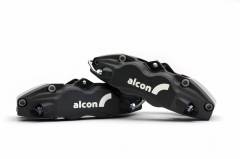
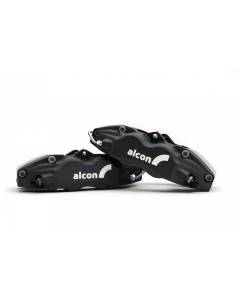
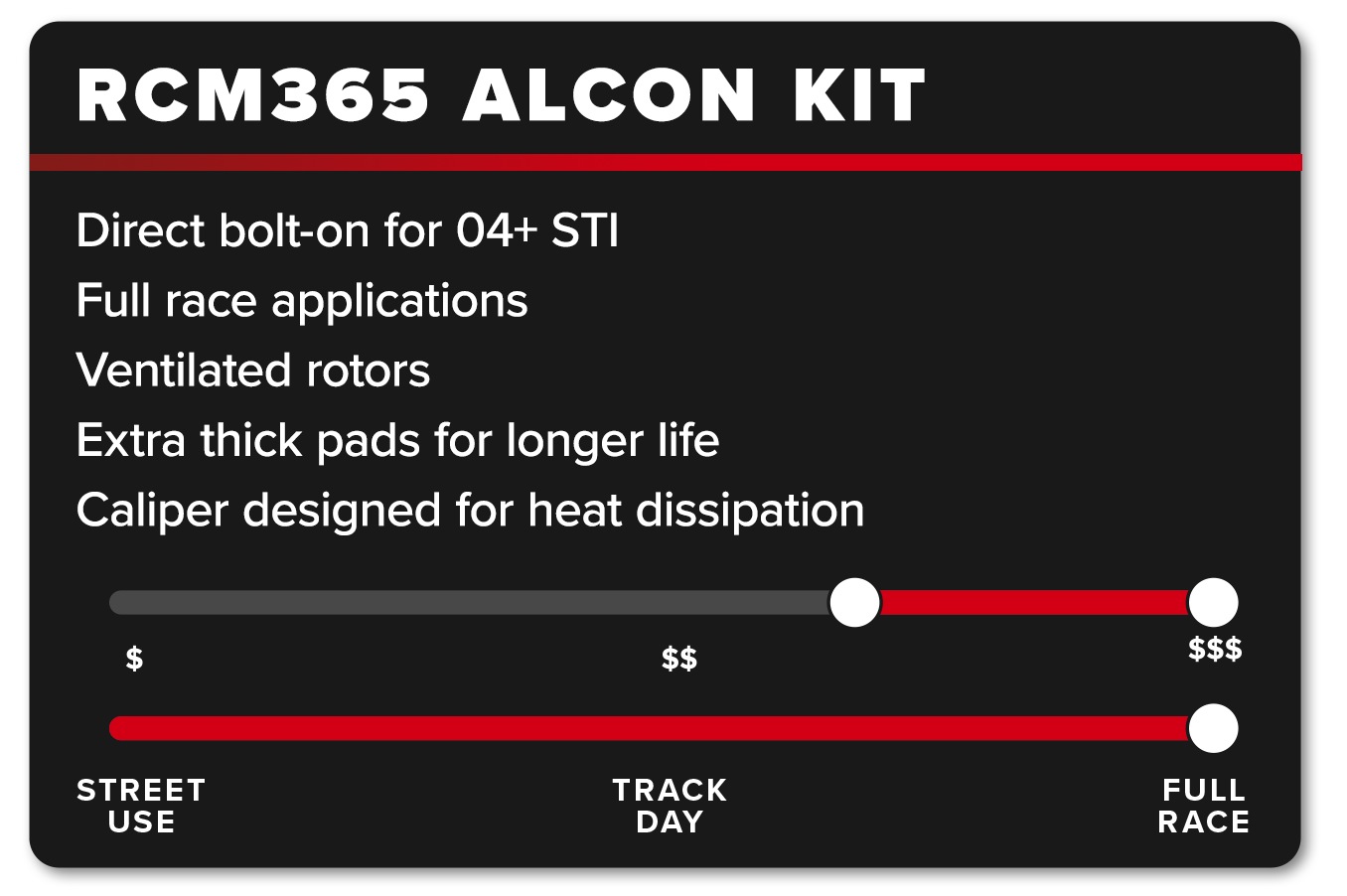
For all-out Motorsport use, Roger Clark Motorsport worked with Alcon to develop a 365mm front and 343mm brake kit that offers exceptional braking performance. The Alcon calipers do not have external seals, and they use thicker pads (18mm thick pads up front for instance) similar to the AP Racing calipers. This gives you long pad live, better heat management, and light weight braking performance.
Because these kits use Alcon calipers, motorsports oriented pads are fairly available, depending on the manufacturer. Street pads are available as well, but this kit is more designed around track use.
Where is this upgrade ideal?
Roger Clark Motorsports has adapted these kits for all of the WRX and STI models from 2002 up to 2014, and this kit is an ideal motorsports option for any car in that range. We are currently running the 365mm front kit on our Pikes Peak race car, and it provides massive stopping power very consistently for us. The light weight design is a fantastic feature as well as the thicker pads, etc. This kit is ideal for aggressive track use, and for high power WRX's and STI's.
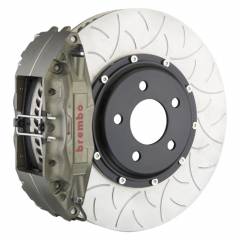
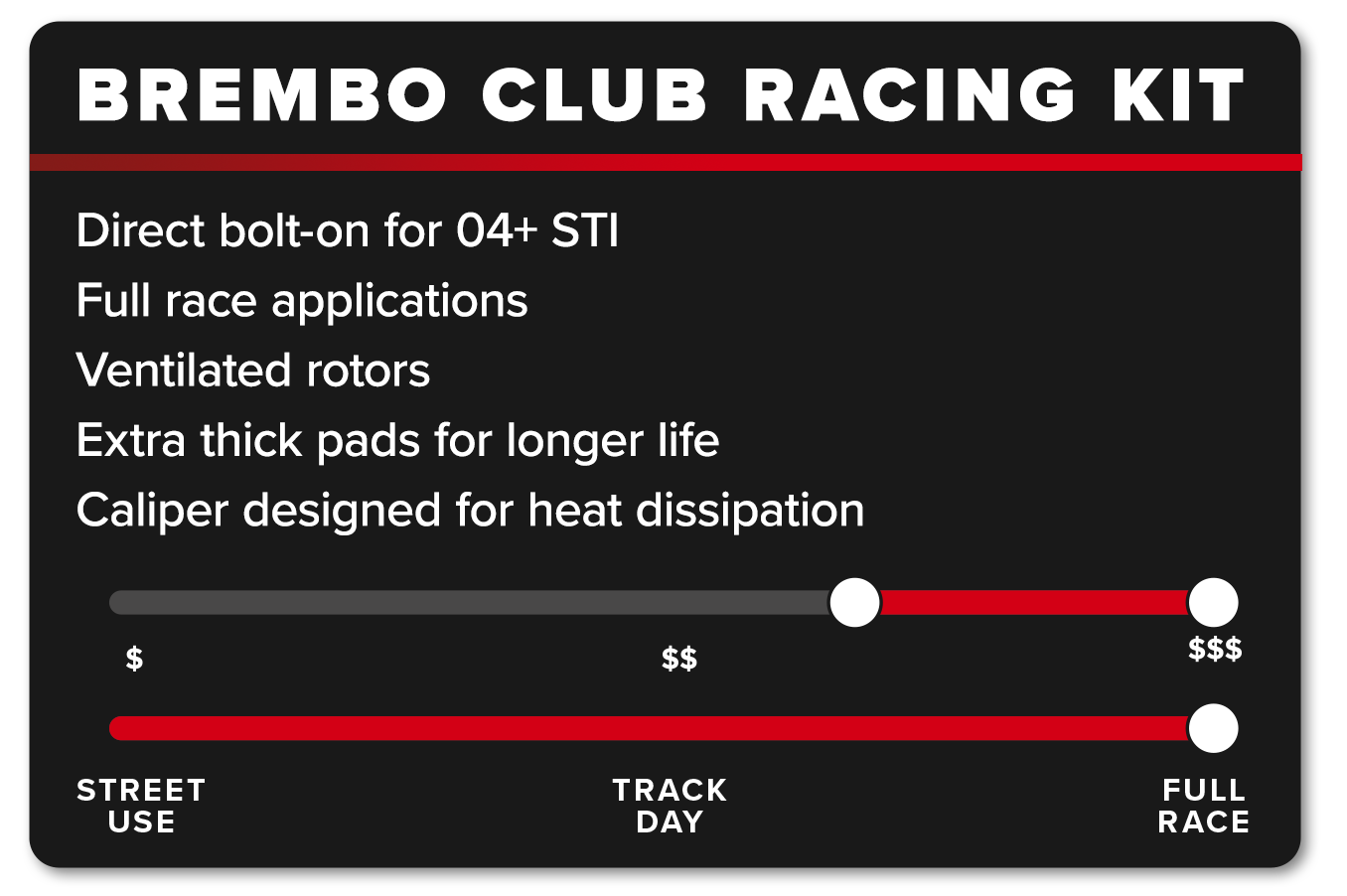
Brembo Race Front 4-Pot (02+ WRX) - Cast 2-Piece
This is the brake kit that Scotty up-graded to from the standard Brembo 355mm GT kit.
The Brembo Club Sport kits are designed around motorsport use, and so they use large calipers without external seals, very thick pads (some kits can fit 25mm thick pads), and thicker rotors as well. These brake kits are designed around aggressive track use or endurance racing, and they are designed to provide massive stopping power from high speeds, or over long track sessions. This is a great option if you are going to be running in a 20+ minute track session wheel to wheel where you need consistent stopping for the entire race, or if you are running any kind of endurance event where you will be on track for long periods of time.
They are ideal for any form of endurance racing, especially in a higher power car.
Essex Designed AP Racing Radi-CAL Enduro Brake Kit - Front CP9660 (04+ STI)
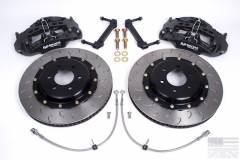
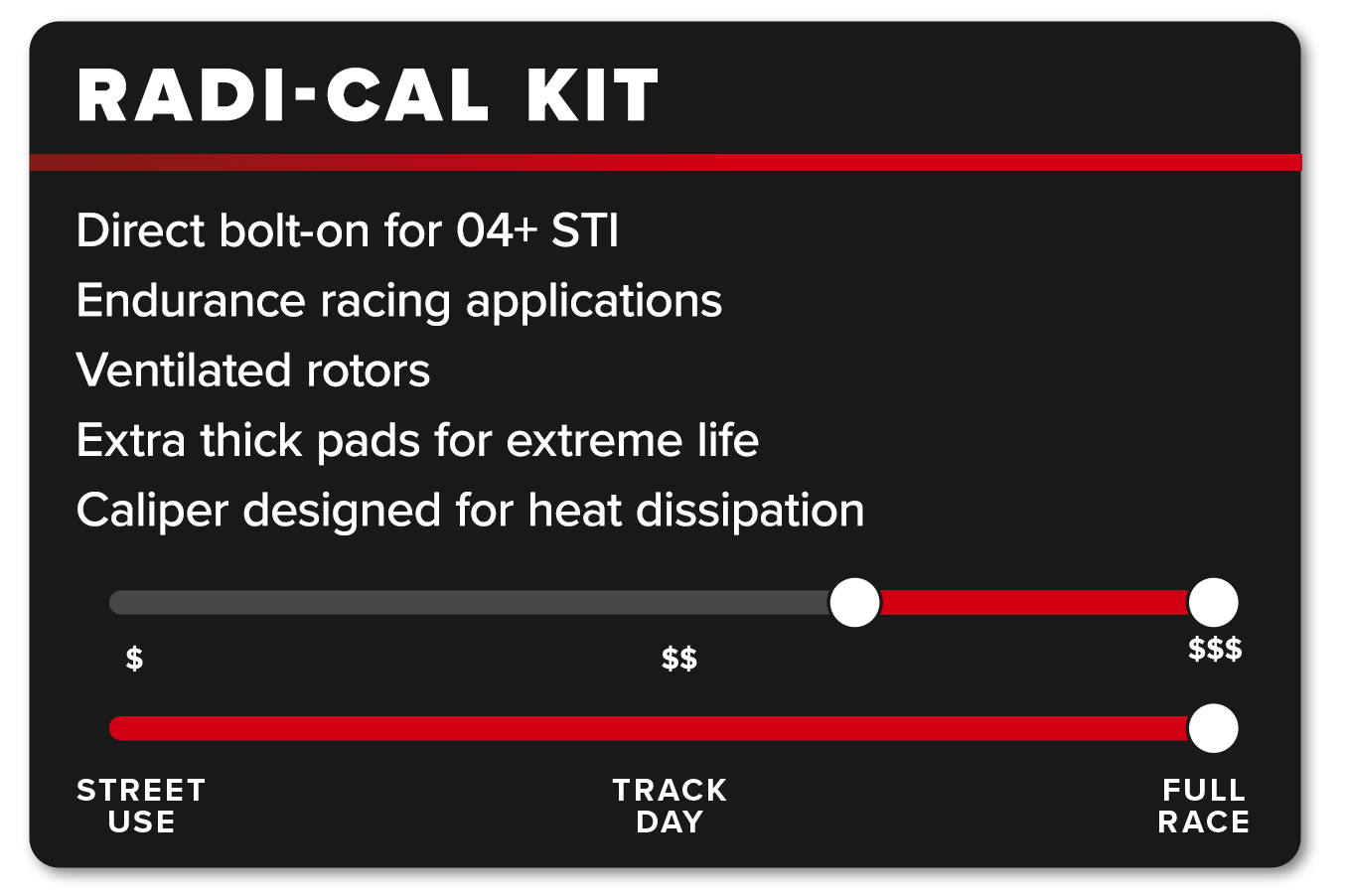
The AP Racing Radi-CAL Competition Brake Kit for the STI is designed to give you maximum stopping power and control, no matter if you are running in a short sprint race, up to a full Endurance event where you will be on track for hours at a time.
This kit uses a 355mm x 32mm 72 vane AP Racing Disk, and the AP Racing CP9668 Radi-CAL 6-piston calipers. These calipers use a 25mm thick (per side) pad, and the calipers themselves are designed to be as light as possible, while also being incredibly rigid. As an added benefit, the material removed from the calipers also helps to improve the cooling for the brakes.
If you need the ultimate stopping power for your WRX or STI, the AP Racing Radi-CAL is a fantastic choice.
| SKU | brakes-blog |
|---|---|
| Brand | Flatirons Tuning |