We use cookies to make your experience better. To comply with the new e-Privacy directive, we need to ask for your consent to set the cookies. Learn more.

Big Changes, CARB Parts, and Green Speed full details - Catching up with Cobb Tuning
July 22, 2026
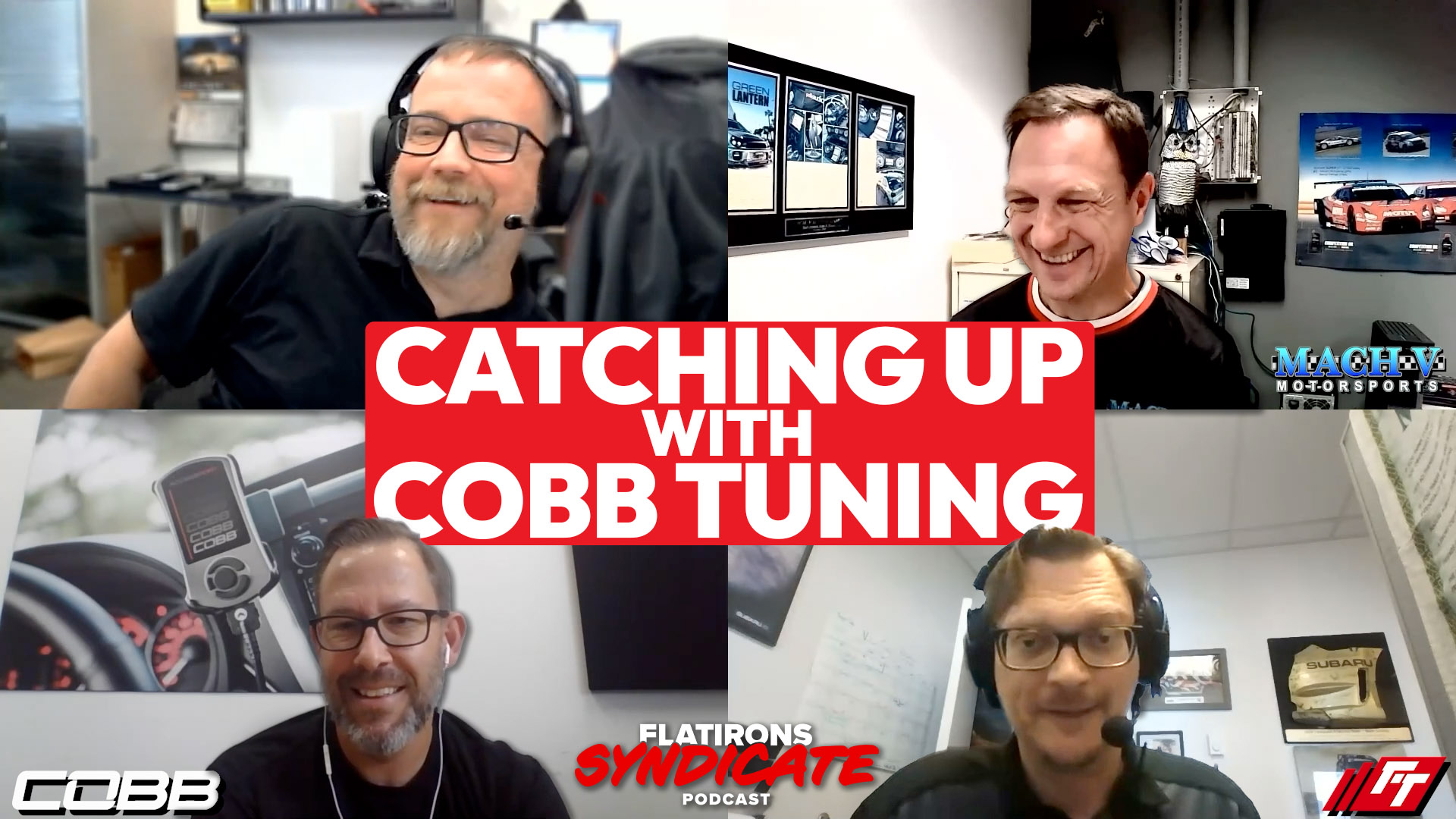
Cobb Tuning has been at the center of Subaru Performance basically since it was founded in 1999. When they released the first version of the AccesPort in 2004, they completely changed the way that Tuning worked, and established the foundation for what the future of Subaru Performance would be for decades to come.
In this episode, Jon and Dan (Mach V Motorsports) sit down with Tadd Crayton (President of Cobb Tuning) and Billy Brooks (Chief Technical and Compliance Officer) to get a clear picture of where Cobb is now, and what they are working on for the future.
We start out the conversation talking about the Green Speed initiative which was the point where Cobb set a new standard for CARB compliance for all of their Performance Parts.
We then talk about the changes that are happening at Cobb this year as they re-structure to work with some of the brands that their Parent Company (Engineered Performance Technologies) has added to their group, specifically Grimmspeed, PRL, and Hondata.
From there, we talk about some of the things that Cobb has been working on for the future, specifically a CARB approved Down Pipe (which still has a little development to go, but is getting close) and the possibility of a CARB approved Flex-Fuel kit in the future.
Thanks for watching and Stay Tuned!
In this Episode:
0:00 - Introduction and Guest Welcome
1:10 - Cobb Tuning’s History and Long-term Relationships
3:15 - Deep Dive: The Truth Behind the Green Speed Update
5:25 - Compliance Challenges: Tuning Software and Emissions
10:15 - The Evolution of OTS Maps and Downpipe Decisions
12:50 - Understanding CARB and Executive Orders (EO)
15:35 - The Impact of Diesel "Rolling Coal" on the Industry
21:50 - Federal vs. California Standards: Why CARB Leads
25:20 - The Role of SEMA Garage in Emissions Testing
31:00 - The High Cost of Performance Part Certification
43:35 - Innovating for the Future: The CAN Gateway Solution
51:50 - Recent Changes at Cobb and Parent Company Synergies
58:30 - Growth into Toyota Trucks and New Platforms
1:09:00 - Future Outlook: CARB Compliant Downpipes? and other New Parts?
1:13:30 - Sneak Peek: Alternative Device Support for Accessport
1:19:15 - Closing Thoughts
Here is a summary of the key points discussed in this episode:
The Green Speed Update and the EPA [02:40]
The Timeline: While the "Green Speed" update felt sudden to many enthusiasts in 2022, Cobb Tuning's discussions with the EPA actually began in 2016. It was a 6-to-7-year process of education and legal back-and-forth, not a sudden decision to "cave" to the EPA.
The Issues: The EPA was primarily concerned with aftermarket tuning software allowing consumers to delete emissions equipment, suppress Diagnostic Trouble Codes (DTCs), and modify engine parameters that negatively impact tailpipe emissions. Specific hardware concerns included TGV deletes, air pump deletes, MAF block-off plates, and catless downpipes.
The Changes: Cobb had to make several major changes in stages as legal battles were lost:
Recreating all Off-The-Shelf (OTS) maps in firmware to ensure compliance (no emissions systems disabled).
Removing downpipes from their catalog.
Removing Flex Fuel support (and buying back hundreds of thousands of dollars in downpipes and flex fuel kits).
Removing the ability to suppress DTCs related to emissions components [10:02].
The Sudden Switch: The final DTC suppression change was implemented immediately without a 30- or 60-day warning to prove to the EPA that they were compliant and to avoid a massive rush of shops doing "nefarious" deletes before a deadline.
The Consent Decree: Cobb operates under a consent decree and must report its actions to the EPA yearly and undergo annual Clean Air Act training.
CARB Certification (EOs) and Testing Constraints [13:00]
The Standard: Because the EPA does not have a massive aftermarket testing division, they often default to the California Air Resources Board (CARB) as the baseline for compliance. For a part to be legal, it typically must secure a CARB Executive Order (EO) [22:25].
Testing Costs: Securing an EO is incredibly expensive. In the past, testing a single component could cost around $20,000. Now, depending on the part and the test cycles required (FTP, US06, SC03), it can range from a $500 application fee to $30,000+ [31:03].
Emissions Limits: A vehicle cannot exceed its factory-certified emissions category limit (e.g., ULEV, LEV). Some high-performance cars (like the Focus RS) already operate at 98% of their legal emissions limit from the factory, making aftermarket modifications incredibly difficult. Subarus are generally around 50% of their limit [29:48].
Cobb’s Investment: Cobb currently holds 330 EOs. At one point, they owned 55 different vehicles across 8 states just for emissions testing [41:06].
New Technology: CAN Gateway and Flex Fuel [44:17]
The Innovation: Cobb invested over $1 million developing their CAN Gateway solution.
How it Works: Previously, Flex Fuel sensors had to hijack existing analog ECU inputs (like a TGV sensor). The CAN Gateway allows Cobb to introduce new data (like ethanol content) directly onto the car's CAN bus network without sacrificing any OEM sensors [45:28].
Future CAN Features: They are expanding this to allow customers to add additional sensors (e.g., crankcase pressure, oil pressure) that can be logged via the Accessport and even used to create engine safety cut-offs [01:12:06].
Flex Fuel Legalization: They are actively working with organizations and tracking California bills (like AB 2046) that could force CARB to establish a testing standard for Flex Fuel conversions, which currently don't have a clear legal pathway because CARB views them as "alternative fuel conversions" [48:09].
Restructuring and Private Equity [51:07]
The Corporate Umbrella: Cobb is owned by Engineered Performance Technology (EPT), which recently acquired PRL Motorsports, Grimmspeed, and Hondata.
Warehouse and Manufacturing Changes: To create efficiency, Cobb reduced its manufacturing and warehousing footprint in Austin, TX. Fulfillment has been moved to a central tuning distribution center in Sycamore, Illinois, shared with PRL and Grimmspeed.
The Core Remains: Despite rumors of downsizing, Cobb's engineering, software, calibration, QA, sales, and support teams remain fully intact in Austin [55:44].
Brand Identity: While there are synergies on the backend, Cobb, Hondata, PRL, and Grimmspeed will maintain their individual brand identities, leadership, and cultures [01:02:15].
The Future of Cobb [01:09:55]
New Platforms: While Subaru remains their bread and butter, Cobb's fastest-growing segment is the truck market (Toyota Tacoma/Tundra/4Runner, Ford F-150 Raptor). They also continue strong support for Porsche and Volkswagen [58:27].
Upcoming Subaru Parts:
A CARB-compliant header for the VA WRX is expected within weeks.
A turbo inlet for the VB WRX.
They are very close to a solution for a CARB-compliant downpipe, a project they've worked on for 10+ years [01:11:09].
They are working on a solution to legally replace intakes on the VB WRX and Ascent, which currently feature factory hydrocarbon traps that cannot be legally deleted under the Clean Air Act [01:14:13].
New Accessport Features: They teased an upcoming SEMA announcement regarding the ability to update Accessports via alternative electronic devices (for people who don't own laptops/PCs) [01:13:26].

Share on Facebook

Share on X

Share on Pinterest